COCO GALBA
(Alexandre Bavard)
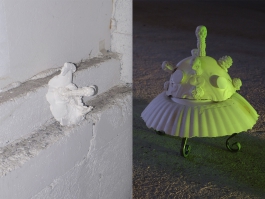
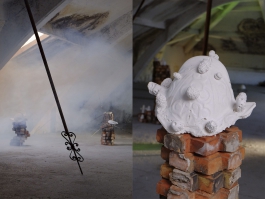
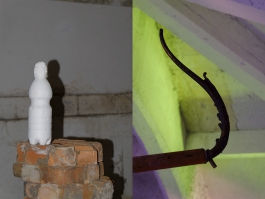
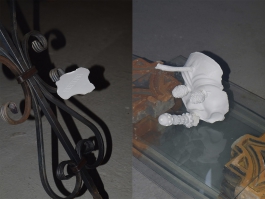
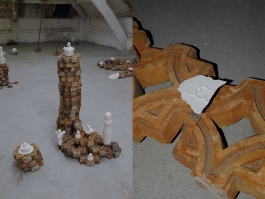
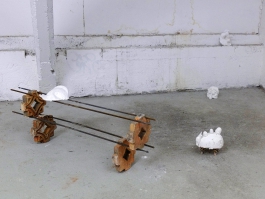
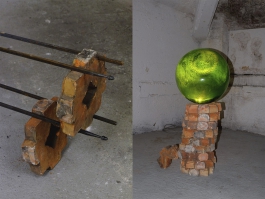
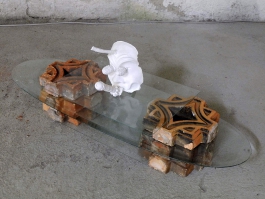
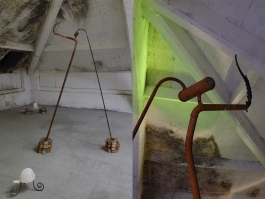
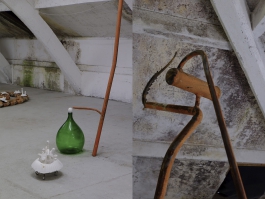
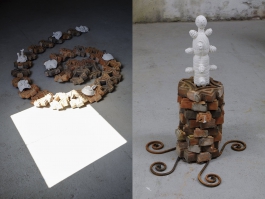
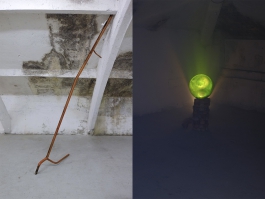
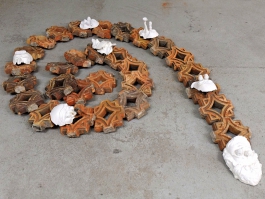
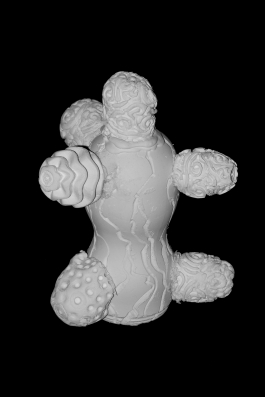
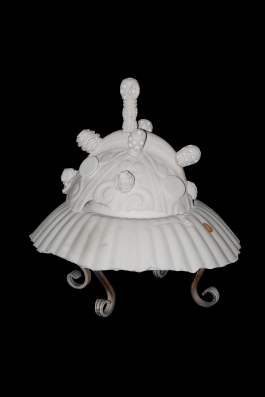
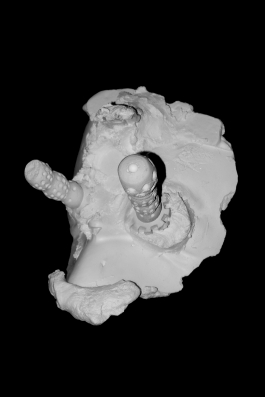
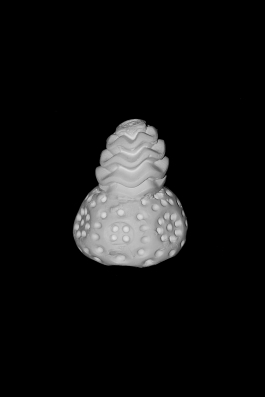
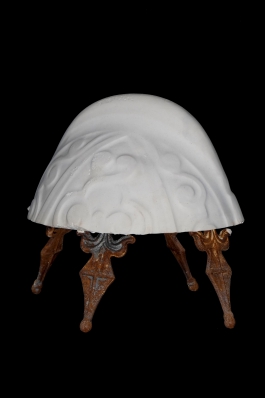
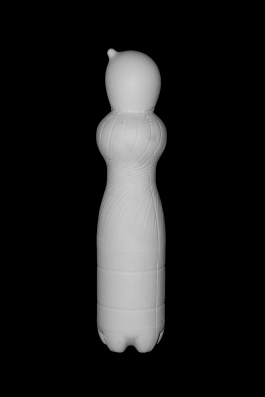
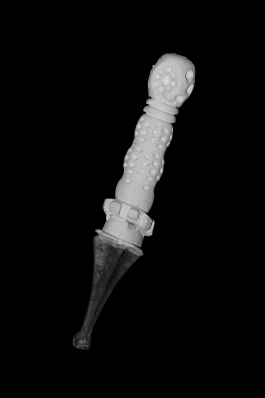
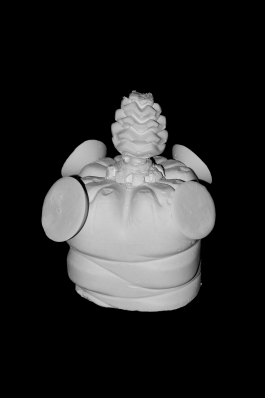
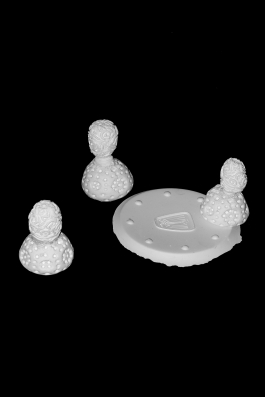
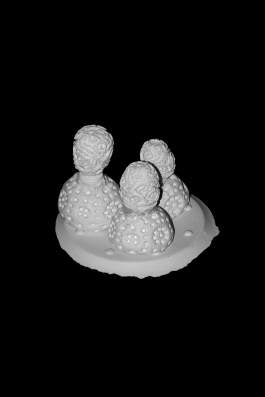
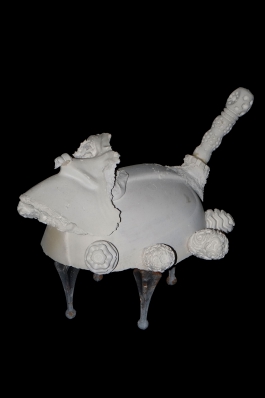
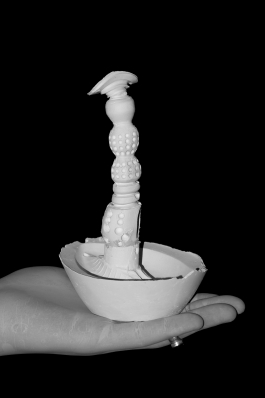
Bavardian (sculptures), non-named objects, are constructed as the assemblages of few different materials: clay, metal and plaster. Each represents a specific material world (architectonical as the projection on space and time, biological through the use of forms of male/female genitalia). The phallus and vulva are intertwined in libidic queer interaction with the ecology of other materials, as if “human” dissolves (but takes place once again) in the nature that has been broken. The logic of these assemblages is the one of «Becoming».
Is it possible to identify phases within this formativity, plateaus of differentiation? If so, do the phases/plateaus follow a temporal sequence? Or, does the process of formation inside «Becoming» require us to theorise a non-chronological kind of time? … How can we account for something like literal structures in an assemblage theory? The Vibrant Matter illustrated through music, in the way that archeology works, excavates different strata of matter. Deeper down in geo-earth, the aeons of history are compressed and accelerated in the deep-time of past being perceived as variations and oscillations of tones and Db of sound.
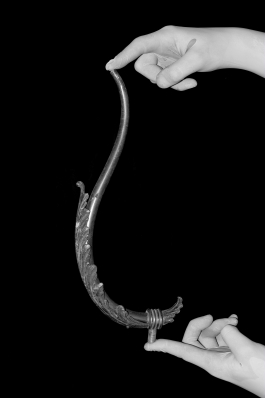
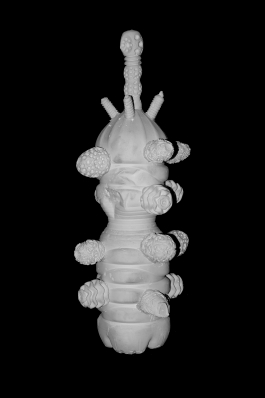
The sculptures work like weird objects, the non-named objects, following the force of the Old Ones, that does not share the same reality of human beings. But still they encounter the human world in the non-place, that is neither human phenomenological realm, neither noumenal dimension of reality.
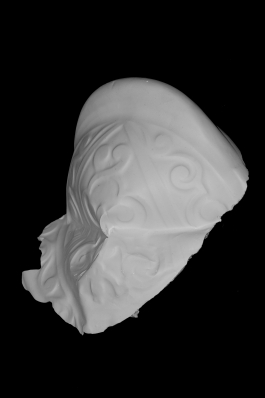
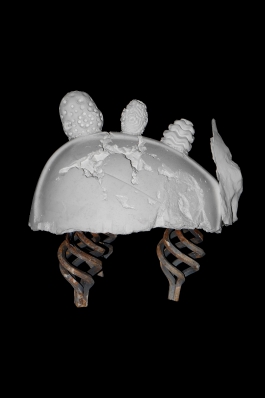
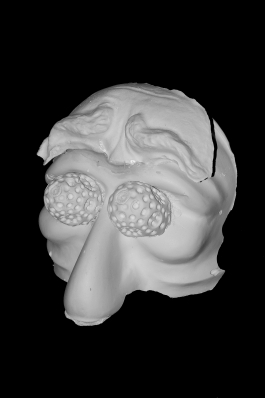
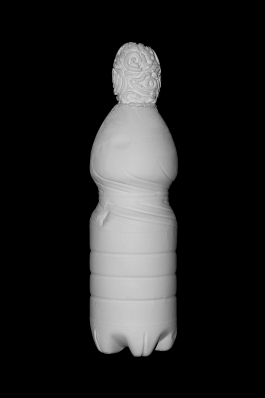
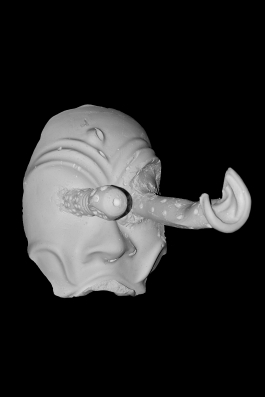
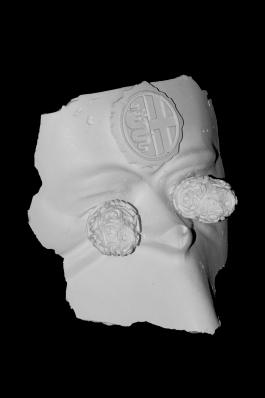
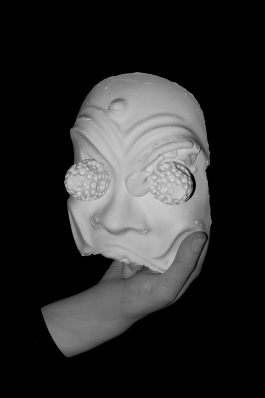
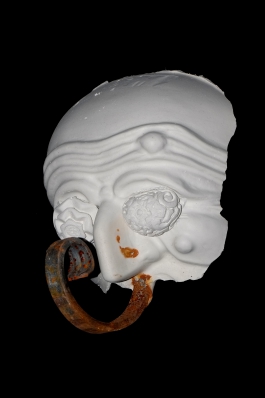
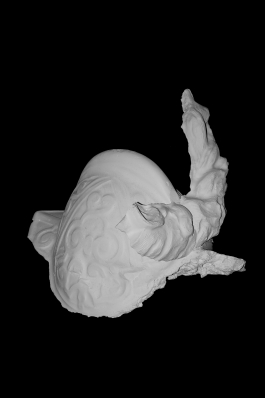
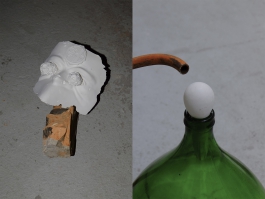
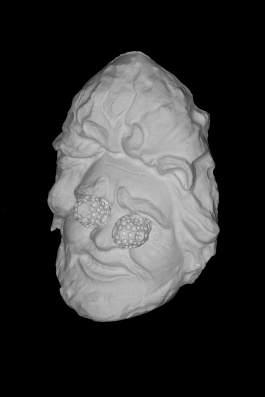
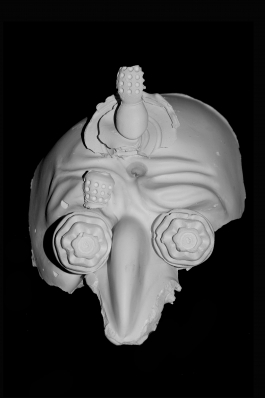
The masks represent the change of the identity when the human encounters the non-human, becoming an animal. The mask, as the expression of the ego, is the quintessence of horror, of becoming-mad, as when the thought encounters the exterior intelligence of the real, both in organic and inorganic matter, it looses its tight correlationist control.
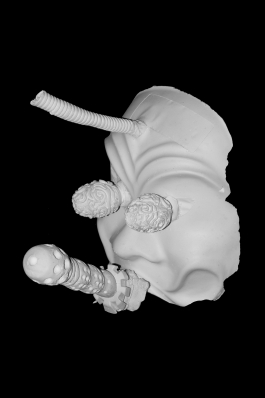
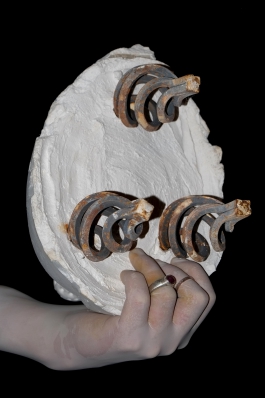
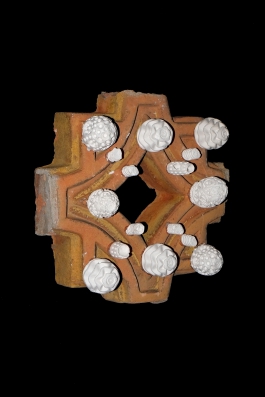
The bricks and metal pipes are mixed in various ways, forming «novel meshworks and hierarchies» as if «different skills and procedures performed by artisans brought to the medieval cities are mashed by the «autocatalytic dynamics» evolving through bifurcations…The process that generated new skills and the consequent complication of the meshworks».
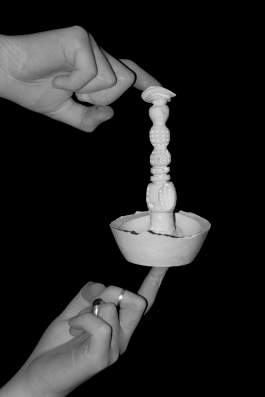
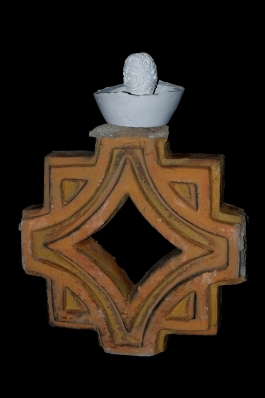
Between different properties of hyperstition, the most consonant to the fictional quality of supernatural objects, that are the time-traveling device and coincidence intensifier: objects like «fulmini stones», simple tools or weapons of the Stone Age that Romans collected during the time of the emperor Galba, «They ignored what were these objects — that is, objects created by the hand of man — rather lending them a over-natural origin».
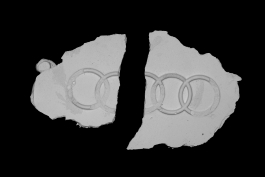
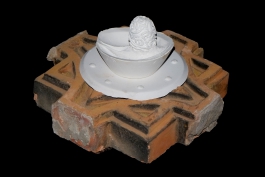
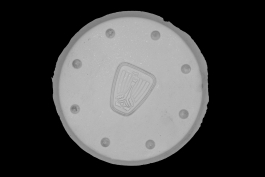
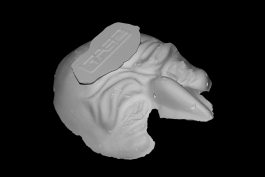
In this sense Alexandre Bavard uses plaster to violently collide different kinds of materials. For him it is the material of plaster and sculptures itself that craves and binds together different types of materials, accumulations in which each successive layer does not form a new world closed in itself but, on the contrary, results in coexistence and interactions of different kinds.
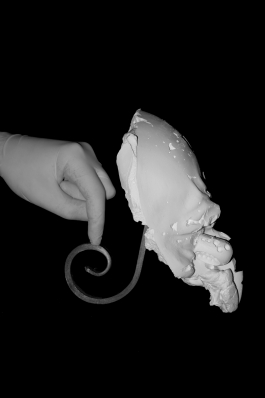
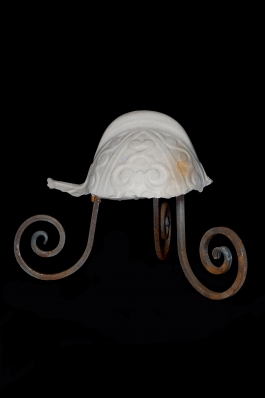
The roman emperor Galba kept these objects as omen of power. But the objects that follow the Elder Ones become self aware and «rose up against their masters in an ultimately failed rebellion. After the Elder Ones retreated into the oceans leaving the Shoggoths to roam the frozen wastes of the Antarctic».
«Without the sobriety of the principle of sufficient reason (following Meillassoux) we have a world of neon madness: “we would have to conceive what our life would be if all the movements of the earth, all the noises of the earth, all the smells, the tastes, all the light — of the earth and elsewhere, came to us in a moment, in an instant — like an atrocious screaming tumult of things», like a Carnival or more likely the end of Carnival as Apocalyptic Drift.
16 - 22.04.2018
ALEXANDRE BAVARD is a French multidisciplinary artist, visionare and explorer. Working in the space between probable and improbable, his pieces are bred by the era of anxiety we live in. Dealing with the notion of ritual between mystery and strangeness his body of work touches crucial questions regarding future of human kind.
Taking its roots in Neo-Archeologia series, “Coco Galba – The carnival is over” takes a turn towards realm of “the others”, where the final pieces are loosing their initial name and definition, to gather new properties and vital powers.
Exhibition is a result of two week residency of Alexandre Bavard inside “Macao – New center of Arts, Culture and research”, Milano and extensive interaction with the wasteland of Ex“Macello di viale Molise”.
Words: YURI KRUGLOV
Curator: VITALY WEBER
Soundscape: A–C
Photography: SASHA STAVNICHUK
Special thanks to FEDERICO ALDOVISI for the given support and possibility towards new frontiers.

COCO GALBA
(Alexandre Bavard)
Bavardian (sculptures), non-named objects, are constructed as the assemblages of few different materials: clay, metal and plaster. Each represents a specific material world (architectonical as the projection on space and time, biological through the use of forms of male/female genitalia). The phallus and vulva are intertwined in libidic queer interaction with the ecology of other materials, as if “human” dissolves (but takes place once again) in the nature that has been broken. The logic of these assemblages is the one of «Becoming».
Is it possible to identify phases within this formativity, plateaus of differentiation? If so, do the phases/plateaus follow a temporal sequence? Or, does the process of formation inside «Becoming» require us to theorise a non-chronological kind of time? … How can we account for something like literal structures in an assemblage theory? The Vibrant Matter illustrated through music, in the way that archeology works, excavates different strata of matter. Deeper down in geo-earth, the aeons of history are compressed and accelerated in the deep-time of past being perceived as variations and oscillations of tones and Db of sound.
The sculptures work like weird objects, the non-named objects, following the force of the Old Ones, that does not share the same reality of human beings. But still they encounter the human world in the non-place, that is neither human phenomenological realm, neither noumenal dimension of reality.
The masks represent the change of the identity when the human encounters the non-human, becoming an animal. The mask, as the expression of the ego, is the quintessence of horror, of becoming-mad, as when the thought encounters the exterior intelligence of the real, both in organic and inorganic matter, it looses its tight correlationist control.
The bricks and metal pipes are mixed in various ways, forming «novel meshworks and hierarchies» as if «different skills and procedures performed by artisans brought to the medieval cities are mashed by the «autocatalytic dynamics» evolving through bifurcations…The process that generated new skills and the consequent complication of the meshworks».
Between different properties of hyperstition, the most consonant to the fictional quality of supernatural objects, that are the time-traveling device and coincidence intensifier: objects like «fulmini stones», simple tools or weapons of the Stone Age that Romans collected during the time of the emperor Galba, «They ignored what were these objects — that is, objects created by the hand of man — rather lending them a over-natural origin».
In this sense Alexandre Bavard uses plaster to violently collide different kinds of materials. For him it is the material of plaster and sculptures itself that craves and binds together different types of materials, accumulations in which each successive layer does not form a new world closed in itself but, on the contrary, results in coexistence and interactions of different kinds.
The roman emperor Galba kept these objects as omen of power. But the objects that follow the Elder Ones become self aware and «rose up against their masters in an ultimately failed rebellion. After the Elder Ones retreated into the oceans leaving the Shoggoths to roam the frozen wastes of the Antarctic».
«Without the sobriety of the principle of sufficient reason (following Meillassoux) we have a world of neon madness: “we would have to conceive what our life would be if all the movements of the earth, all the noises of the earth, all the smells, the tastes, all the light — of the earth and elsewhere, came to us in a moment, in an instant — like an atrocious screaming tumult of things», like a Carnival or more likely the end of Carnival as Apocalyptic Drift.
16 - 22.04.2018
ALEXANDRE BAVARD is a French multidisciplinary artist, visionare and explorer. Working in the space between probable and improbable, his pieces are bred by the era of anxiety we live in. Dealing with the notion of ritual between mystery and strangeness his body of work touches crucial questions regarding future of human kind.
Taking its roots in Neo-Archeologia series, “Coco Galba – The carnival is over” takes a turn towards realm of “the others”, where the final pieces are loosing their initial name and definition, to gather new properties and vital powers.
Exhibition is a result of two week residency of Alexandre Bavard inside “Macao – New center of Arts, Culture and research”, Milano and extensive interaction with the wasteland of Ex“Macello di viale Molise”.
Words: YURI KRUGLOV
Curator: VITALY WEBER
Soundscape: A–C
Photography: SASHA STAVNICHUK
Special thanks to FEDERICO ALDOVISI for the given support and possibility towards new frontiers.